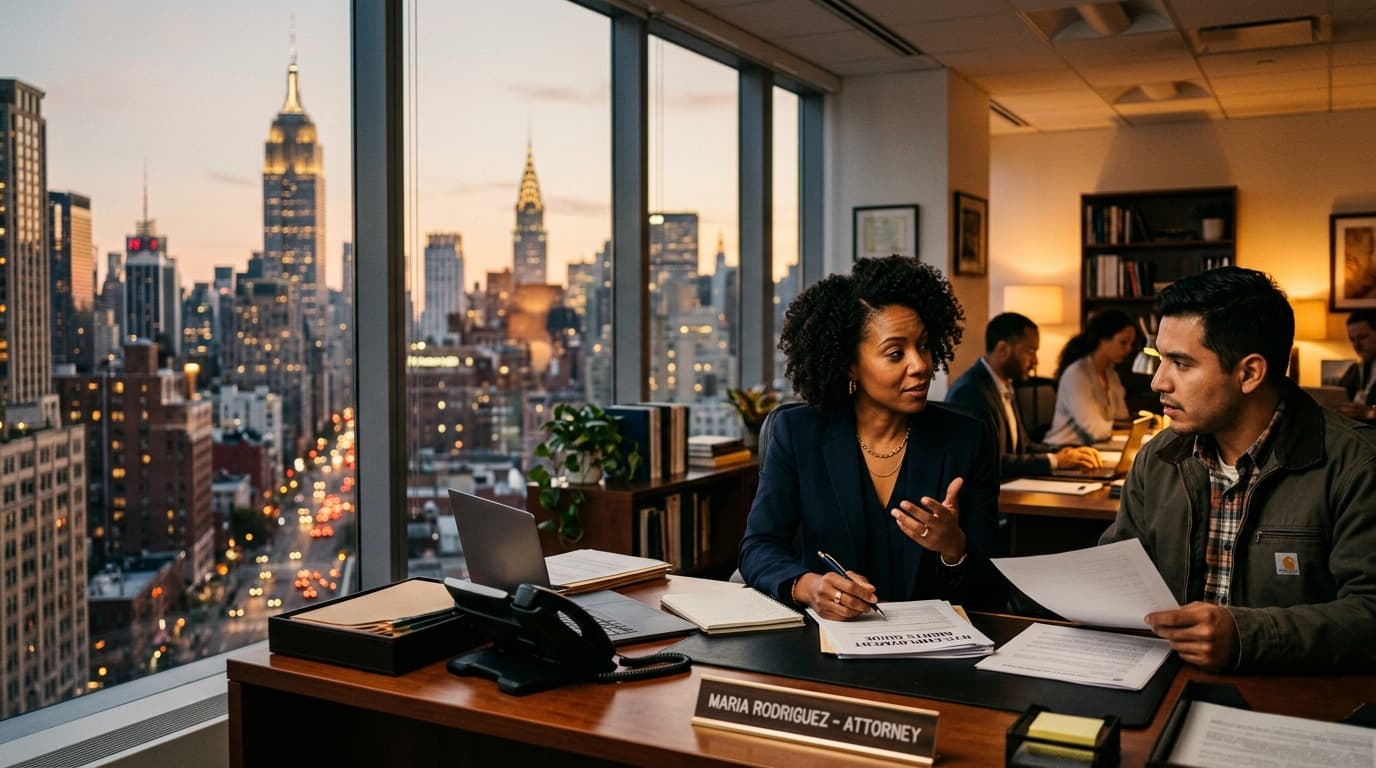
New York's wage protection laws are among the strongest in the nation. Learn the current minimum wage rates, how overtime works, and the step-by-step process to recover stolen wages — including the recent enforcement actions that recovered millions for NYC workers.
Wage theft is the single largest form of theft in the United States, and New York City workers are hit especially hard. According to the NYC Comptroller's Employer Violations Dashboard, millions of dollars in stolen wages are recovered for workers each year — but many more go unclaimed because workers don't know their rights.
If your employer hasn't paid you for hours worked, shorted your paycheck, or denied you overtime, this guide covers everything you need to know.
What Counts as Unpaid Wages?
Under New York Labor Law, unpaid wages include any compensation your employer owes you but hasn't delivered:
- Regular hourly wages for all hours worked, including time spent opening/closing, mandatory meetings, and required training
- Overtime compensation — time and a half for every hour over 40 in a workweek
- Spread-of-hours pay — an extra hour at minimum wage when your workday spans more than 10 hours
- Final paychecks not received within the legally required timeframe after leaving a job
- Unpaid commissions or bonuses that were promised as part of your compensation
- Tip theft — when employers keep tips, require illegal tip pooling, or take a tip credit without meeting the legal requirements
- Illegal deductions for uniforms, tools, breakage, or cash register shortages
Current Minimum Wage Rates (2026)
As of January 1, 2026, the minimum wage in New York City, Long Island, and Westchester County is $17.00 per hour. The rest of New York State follows at $16.00 per hour.
For tipped workers in NYC, the rules are more complex:
- Service employees (hotel staff, nail salon workers, etc.): $14.15 cash wage + $2.85 tip credit
- Food service workers: $11.35 cash wage + $5.65 tip credit
Starting January 1, 2027, minimum wage increases will be tied to the Consumer Price Index (CPI-W) for the Northeast Region and announced each year by October 1.
Key rule: If your tips don't bring your hourly earnings to at least $17.00, your employer must make up the difference. Many employers fail to do this — it's one of the most common forms of wage theft in the restaurant industry.
Overtime Rules
Most employees must receive 1.5 times their regular hourly rate for every hour worked over 40 in a single workweek. For 2026, the exempt salary threshold in NYC is $1,275.50 per week ($66,300 annually) — meaning if you earn less than that on salary, you are likely entitled to overtime regardless of your job title.
Common overtime violations include:
- Misclassifying workers as "exempt" managers when they spend most of their time doing non-managerial work
- Averaging hours across two workweeks to avoid overtime
- Requiring off-the-clock work before or after shifts
- Paying a flat daily rate regardless of hours worked
Statute of Limitations
In New York, you have up to 6 years to file a claim for unpaid wages — significantly longer than the federal FLSA limit of 2–3 years. This means you can potentially recover wages going back six full years from the date you file.
How to Recover Your Unpaid Wages
Step 1: Document Everything
Keep records of hours worked, pay stubs, text messages from supervisors, schedules, and any written promises about pay. Even handwritten notes with dates and hours are valuable evidence.
Step 2: Calculate What You're Owed
Add up regular wages, overtime, spread-of-hours pay, and any illegally withheld tips. New York law entitles you to liquidated damages equal to 100% of the unpaid amount — meaning if you're owed $10,000, you could recover $20,000 plus interest.
Step 3: File Your Claim
You have two main options:
- New York State Department of Labor — File online or by mail. No attorney needed. The DOL investigates and can order your employer to pay.
- Civil lawsuit — File in court with an attorney. This route can yield higher recoveries, especially for class or collective actions when multiple workers are affected.
Step 4: Collect
If you win, your employer owes the unpaid wages, liquidated damages (up to double), prejudgment interest, and potentially your attorney's fees.
Real Enforcement: Recent Results
In March 2026, the NYC administration secured nearly $2 million in restitution for over 830 fast-food and retail workers from Dunkin'/Taco Bell franchisees and Theory (the fashion retailer) for Fair Workweek Law violations. The city has recovered over $8.5 million for workers since taking office, including nearly $5 million for delivery workers at Uber Eats, Fantuan, and HungryPanda.
These are not abstract numbers — they represent real money returned to working people.
Your Employer Cannot Retaliate
Under New York Labor Law § 215, it is illegal for your employer to fire you, reduce your hours, threaten you, or take any negative action against you for filing a wage claim, complaining about pay, or cooperating with an investigation. Violations carry civil penalties of $1,000–$10,000 per offense.
If your employer threatens to report your immigration status as retaliation for a wage complaint, that is also illegal under New York law.
Get Help
If you believe you're owed wages, the clock is ticking — even with a 6-year statute of limitations, evidence gets harder to collect over time. Document your case now and start the process.
Written by
James Calloway
Founder and Editor at NYCWorkJustice. Focused on making employment law accessible to every worker in New York City, regardless of language or immigration status. Researches NYC labor statutes, enforcement actions, and worker protection trends to help people understand and exercise their rights.
Need Help With Your Case?
If you believe your rights have been violated, our platform can connect you with an experienced employment attorney at no upfront cost.
Start Your Free Case Review